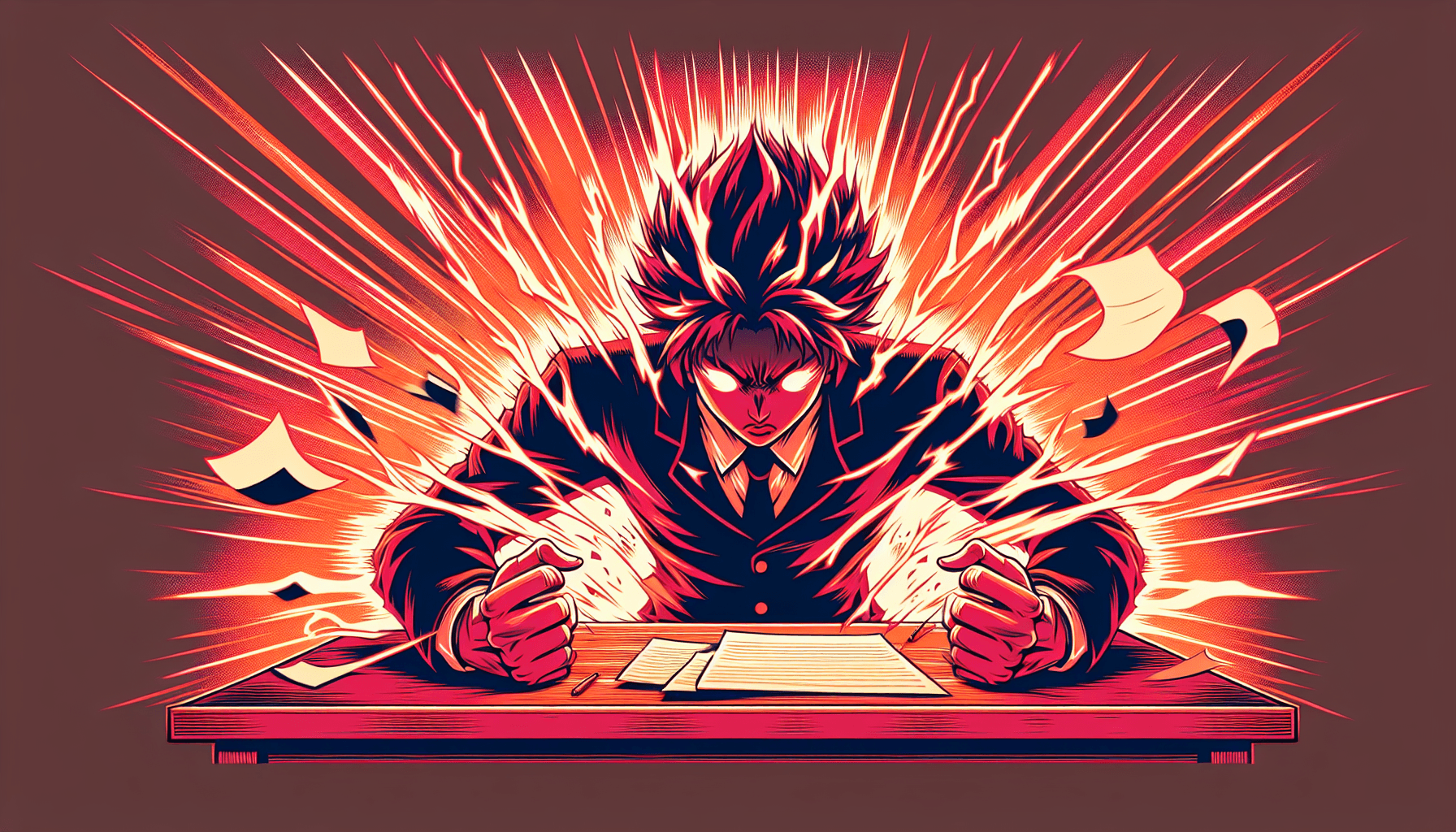
Oh, you already knew, didn't you? You took this quiz already annoyed — maybe at the quiz itself, maybe at the fact that you're taking a quiz to confirm something you absolutely already know — and now here we are. You're The Rage Quitter, and honestly, the name barely covers it.
Your burnout doesn't whisper. It screams. While other people's burnout makes them tired or numb or glued to their phones, yours turned all that exhaustion into rocket fuel for a rage that's pointed at everything and nothing at once. The slow driver in front of you. The coworker who replies-all. The specific way someone chews. The entire concept of Mondays. Things that would mildly annoy a rested person make you feel like you're going to vibrate out of your own body.
Here's what's actually happening under the hood: anger is a secondary emotion. Always. When psychologists talk about the "burnout-anger connection," they're describing a nervous system that's been in fight-or-flight for so long that "fight" became the default setting. You're not actually mad about the email. You're mad because you're exhausted, you feel undervalued, you've been running on fumes for months, and the email was just the last grain of sand before the whole beach collapsed.
What makes your burnout particularly brutal is that anger is energizing — which means you don't feel burned out in the traditional sense. You don't feel tired. You feel wired. Activated. Ready to throw hands with the concept of late capitalism itself. This makes it incredibly easy to miss the burnout entirely because you're still showing up, still performing, still functioning — just furiously. Anger becomes your caffeine. Irritation becomes your alarm clock.
But the people around you? They can tell. The friends who've started walking on eggshells. The partner who asks "are you okay?" in that careful voice that makes you want to scream "I'M FINE" in a way that very clearly communicates you are not fine. Your anger is a force field, and it's doing exactly what your subconscious wants it to do: keeping everyone at a distance so nobody gets close enough to see how much pain you're actually in.
There's a concept in psychology called "irritability as a masked symptom," and it's wildly underdiagnosed, especially in people who don't fit the stereotypical image of someone struggling. You're not sad. You're not lying in bed. You're stomping around getting things done while fantasizing about quitting everything and moving to a cabin in the woods with no Wi-Fi. That's not motivation. That's a coping mechanism wearing combat boots.
The path forward for you is counterintuitive: you need to feel the things underneath the anger. The sadness, the grief, the disappointment, the very reasonable hurt that's been building up for however long you've been running at this pace. Anger is your armor, and it's served you well — it kept you moving when stopping felt impossible. But armor is heavy, and you've been carrying it for too long. Putting it down doesn't make you weak. It just means you're finally ready to feel the weight of what you've been carrying instead of fighting it.