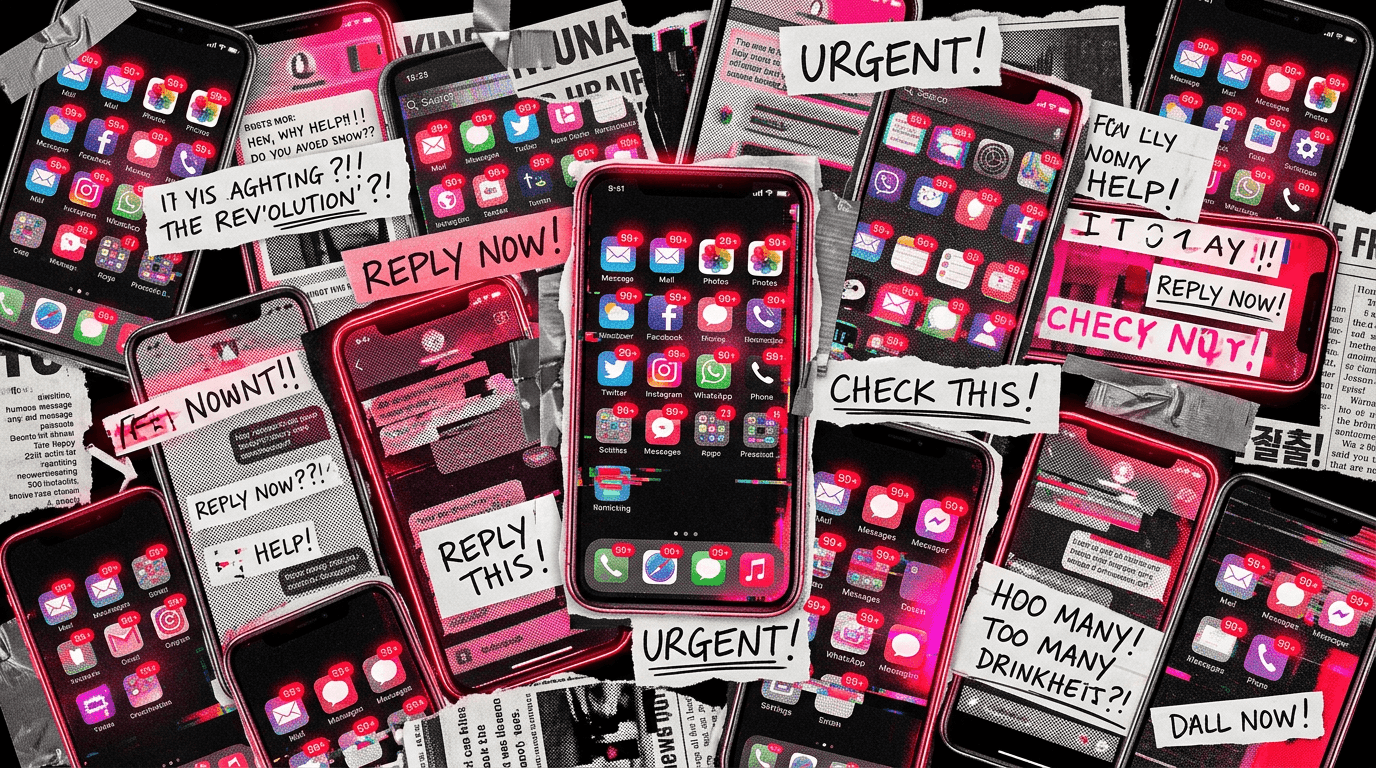
TOXICITY LEVEL: 🌡️ 72/100 — "Annoying out of love, which somehow makes it worse."
So you got The Double-Text Demon, and honestly? Your phone's autocorrect probably has PTSD at this point.
Let's talk about what's really going on here, because the surface-level read is obvious: you text too much. Everyone knows it. Your friends know it. Your crush definitely knows it. Your phone bill knows it. But the real question isn't how much you text — it's why the silence between messages feels like it might actually kill you.
Here's the psychology behind your rapid-fire messaging: you're operating from what attachment theory researchers call an "anxious-preoccupied" attachment style. This doesn't mean you're broken or weird — it means your nervous system has learned to interpret silence as danger. Somewhere along the way, your brain built a direct neural highway between "no response" and "they hate me now," and every unanswered text is your nervous system hitting the panic button.
The double-texting isn't random. It follows a very specific pattern that psychologists call "protest behavior" — small, escalating actions designed to re-establish connection with someone you feel is pulling away. First text: normal. Second text: casual follow-up. Third text: a meme (plausible deniability). Fourth text: "did you get my message?" Fifth text: you're now in full detective mode wondering if they changed their number or if something terrible happened or if they're just sitting there watching your messages pile up like some kind of emotional sadist.
The thing about Double-Text Demons is that you actually feel the spiral happening in real time. You know you should put the phone down. You know sending another message won't make them respond faster. You know that the meme you're about to send "to lighten the mood" is transparently desperate. And yet your thumbs have already typed it, and your anxiety has already hit send before your rational brain even gets a vote.
Your texting behavior in conflict is particularly revealing. While most people either shut down or get strategic when things get tense, you go full stream-of-consciousness. You're sending paragraphs that could be published as novellas. You're processing your emotions in real time through text, which means the other person is getting a live feed of your psychological journey from "I'm fine" to "actually I'm not fine" to "okay here's everything I've ever felt about everything" in the span of seven minutes.
In friendships, your double-texting energy actually has an upside that nobody talks about. You're usually the one keeping the group chat alive. You're the one who checks in when someone goes quiet. You're the person who sends the "thinking of you" text that someone really needed that day. The same impulse that makes you text seven times in a row is the same impulse that makes you deeply attentive to the people you care about.
The growth edge for you isn't about texting less — it's about building tolerance for the discomfort of waiting. Cognitive behavioral therapy research suggests that the anxiety between sending a message and receiving a response is actually a practice opportunity. Each time you resist the urge to send message number four, you're literally rewiring your nervous system to understand that silence is not an emergency. That people can care about you and also take three hours to respond.
But let's be real — you're probably going to screenshot this result and send it to five people before you even finish reading it. Now go ahead and send this result to seven people. You were already going to.