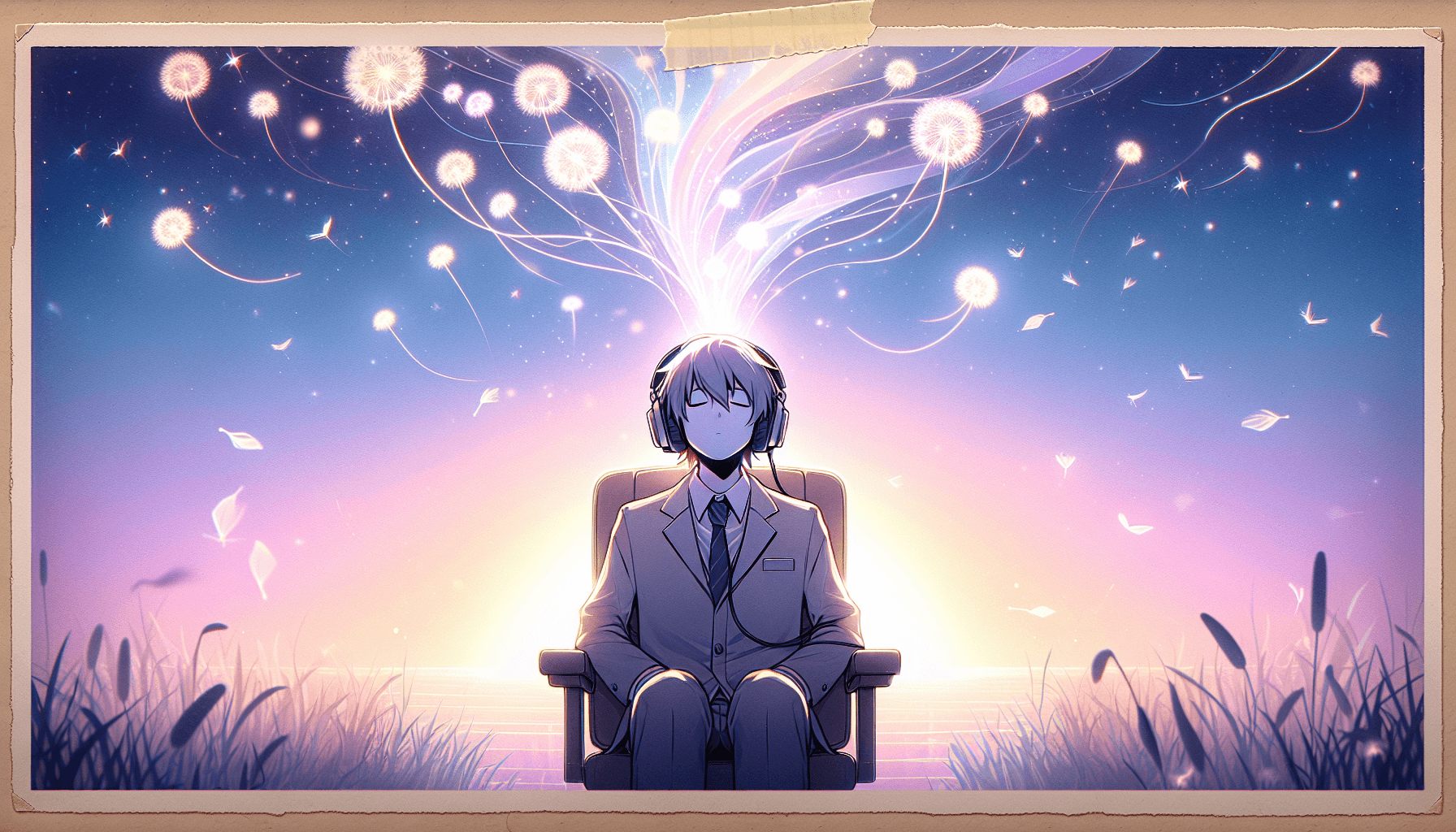
Hm. The Beautiful Ghost. And your reaction to that was probably something like "hm" or a single nod or maybe nothing at all, because that's kind of the whole thing, isn't it? You've reached a state of burnout so advanced that it's looped all the way around and achieved a kind of terrible serenity.
You're not angry about being burned out. You're not sad about it. You're not even particularly stressed. You've moved past all of those active emotional states into something that psychologists would recognize as depersonalization — a detachment from your own experience so complete that everything feels like it's happening to someone else, and that someone else doesn't seem super interested either.
This is the burnout that people miss entirely because it doesn't look like anything. You're still showing up. Still answering when spoken to. Still technically performing the functions of a human being. But there's a quality to your presence — or rather, your absence-within-presence — that the people close to you have started to notice. You respond to good news and bad news with the same flat "cool." Your face does the smiling thing in social situations but it doesn't quite reach whatever part of you used to actually feel things. You've become an incredibly convincing simulation of yourself.
What's happening neurologically is genuinely fascinating in a horrible way. Chronic stress doesn't always lead to anxiety or rage — sometimes the nervous system essentially trips a circuit breaker. It's a protective mechanism called "emotional numbing," and it's your brain deciding that if it can't fight the stressor and it can't flee from it, it'll just... leave. Not physically. Just emotionally. Spiritually. Whatever word you want to use for the part of you that used to get excited about things.
The dangerous thing about your brand of burnout is that it's comfortable. Not in a pleasant way — in a "absence of pain" way. You've stopped feeling bad, which seems like progress until you realize you've also stopped feeling good. Joy, excitement, anticipation, passion — they're all behind the same wall that's blocking out the stress. You didn't get better. You went numb. And numb feels so much better than agonized that it's easy to mistake it for healing.
Your relationships have probably started to show the cracks, even if nobody's said it out loud yet. You're present but not there. You're listening but not hearing. People tell you things and you nod and make the right sounds, but later you couldn't tell someone what was said. You've become a mirror that reflects the right responses without actually absorbing anything. It's efficient. It's protective. And it's incredibly lonely, even though you might not feel the loneliness anymore.
Coming back from this kind of burnout is a slow process that can't be rushed, and the first step is actually the hardest: wanting to come back. Right now, the numbness is serving you. It's keeping you functional in a situation that would otherwise be unbearable. Before you can start feeling again, something about that situation needs to change — whether it's the job, the relationship, the city, or the impossible standard you've been holding yourself to. The ghost needs somewhere safe to land before it can become a person again. You don't have to feel everything all at once. Start with one thing. One small, gentle thing that used to matter. And see if it still does.