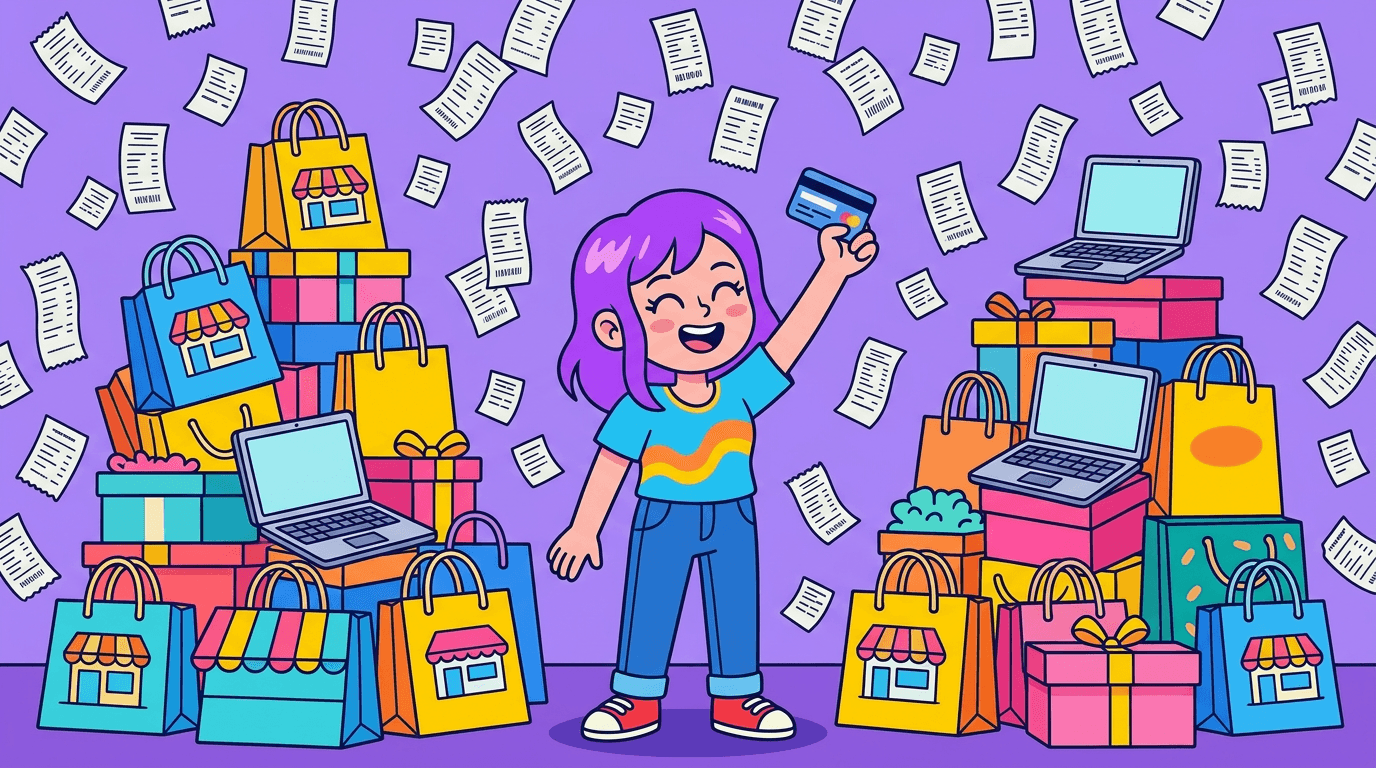
So your emotional support system has a checkout button. Cool. Cool cool cool.
Here's the thing about being The Retail Therapist — it's not actually about the stuff. It never was. That $47 candle you bought at 2 AM after a bad day? You don't care about sandalwood and bergamot. What you care about is the three-second dopamine spike between clicking "Add to Cart" and the brief, beautiful moment where your brain goes quiet. That micro-transaction of neurochemistry is what you're really shopping for, and honestly, your brain's pricing strategy is terrible.
The psychology behind this is actually fascinating in a way that might make you uncomfortable. Retail therapy — or more formally, compensatory consumption — is a well-documented phenomenon in behavioral psychology. When we experience a threat to our self-concept (rejection, failure, loss of control), we seek to restore it through acquisition. You're not buying a new jacket. You're buying a version of yourself that doesn't feel like garbage. The jacket is just the delivery vehicle.
And look, nobody wants to hear this, but there's a reason your spending spikes correlate almost perfectly with your worst emotional moments. Bad date? New shoes. Stressful work week? Suddenly you need every product a TikTok influencer has ever recommended. Existential crisis at 3 AM? Your cart looks like you're preparing for a very stylish apocalypse. The pattern is so consistent that a stranger could probably map your emotional history just by looking at your order history. That's not a fun thought, is it?
What makes The Retail Therapist particularly tricky is that society basically encourages it. "Treat yourself!" is a cultural mantra. "Self-care" has been commercialized to the point where buying things IS the recommended therapy. You're not overspending — you're investing in your well-being! You're not avoiding your feelings — you're practicing radical self-love! The language of wellness has been weaponized by capitalism, and your bank account is collateral damage.
But here's where it gets real: the relief is temporary. Like, embarrassingly temporary. Studies show the emotional boost from a purchase lasts somewhere between a few minutes and a few hours before baseline sadness returns. And now you're sad AND broke. Or sad AND surrounded by packages you haven't opened because the thrill was in the buying, not the having. That growing pile of unopened deliveries by your door isn't clutter — it's an archaeological record of every emotion you refused to process.
The relationship pattern is telling too. You might notice that you're incredibly generous with gifts — but it's less about the other person and more about the high you get from the transaction. Or you might find that retail therapy is actually replacing human connection entirely. Why call a friend when you can call customer service? At least the customer service agent has to be nice to you.
The growth edge for The Retail Therapist isn't about cutting up your credit cards or going on a no-buy challenge (though your future self would probably appreciate that). It's about learning to sit with the uncomfortable feeling long enough to actually identify it. Because right now, every emotion you have gets filtered through one question: "What can I buy to make this stop?" Sadness, anger, boredom, loneliness — they all get the same prescription.
Try this: next time you feel the urge to shop, set a 30-minute timer. Don't buy anything. Just... feel whatever you're feeling. Name it. Let it be there without trying to Amazon Prime it away. It's going to suck. That's sort of the point. The feelings you've been spending money to avoid? They're still there, in your cart, waiting for checkout. Except they're free, and they don't require a return label.