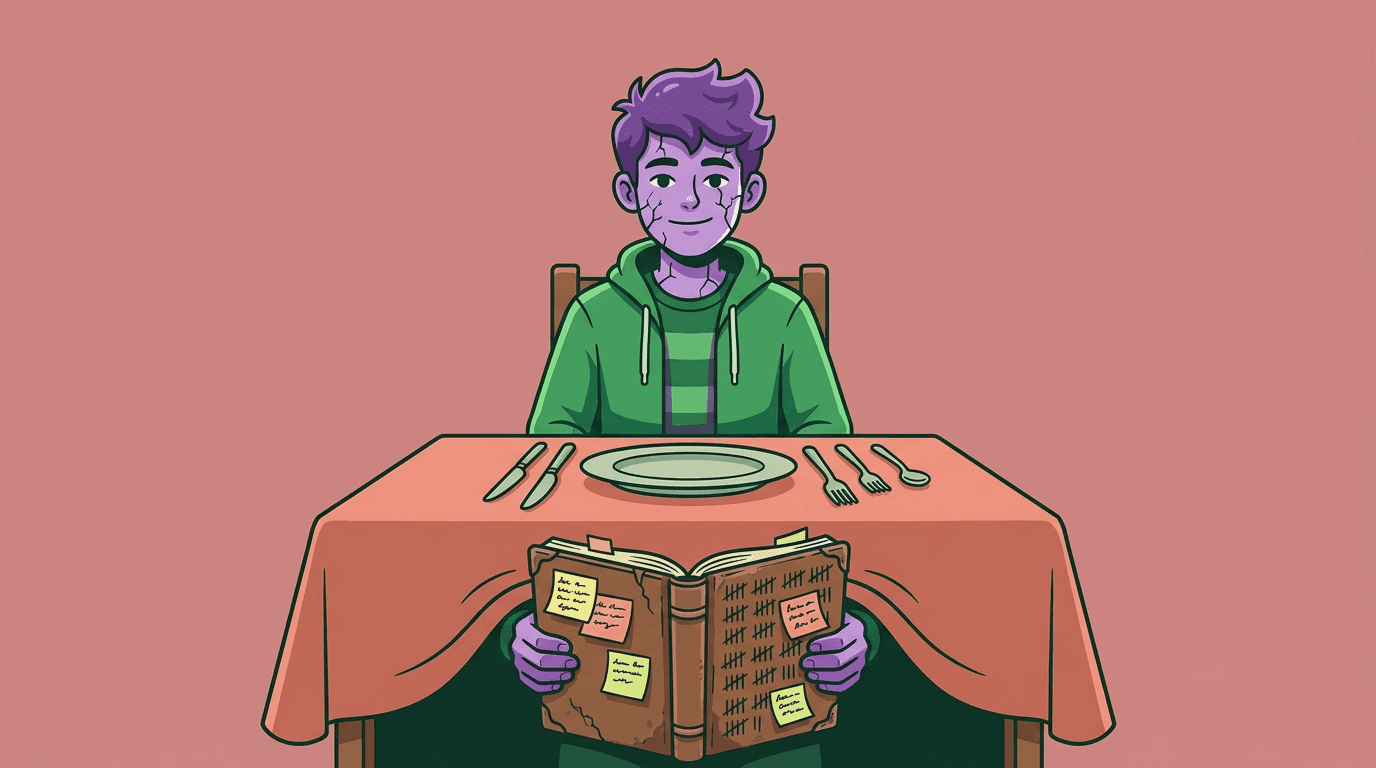
The Silent Scorekeeper. The patron saint of "no, I'm fine" said through teeth so clenched they could crack a walnut. You experience jealousy with the full intensity of a Category 5 hurricane — on the inside. On the outside? Absolutely nothing. A pleasant smile. A normal conversational tone. Maybe a slightly longer blink than usual, but that's it. That's your tell. A blink.
Your jealousy doesn't explode. It sediments. Layer by layer, incident by incident, it accumulates at the bottom of your emotional reservoir like psychological silt. You remember the time your friend got promoted and didn't acknowledge your congratulations text for six hours. You remember the exact outfit your partner's ex was wearing in that photo from 2019. You remember every single time someone got something you wanted, and you remember that you said nothing about it every single time.
This pattern is deeply rooted in what psychologists call "emotion suppression," and research by James Gross at Stanford shows it's one of the least effective emotion regulation strategies available. Not because the emotions go away — they don't — but because suppressing them actually amplifies their physiological impact. Your body is doing the full jealousy experience: elevated cortisol, increased heart rate, the whole stress response. Your face just didn't get the memo.
The Silent Scorekeeper often develops in environments where expressing negative emotions was punished or dismissed. Maybe showing jealousy was labeled as "petty" or "dramatic." Maybe you learned early that the person who cares less wins. So you learned to not-care with Olympic-level commitment. The problem is, you're still caring — you're just doing it alone, in the dark, with no witnesses and no resolution.
The scorekeeping itself is a control mechanism. By tracking every perceived slight, every imbalance, every moment you were overlooked, you maintain a ledger that proves you're owed something. It's a way of preserving your sense of fairness in a world that feels chronically unfair. But the ledger never balances, because you never present the bill.
What makes this pattern particularly corrosive is the timeline. Silent jealousy doesn't resolve — it compounds. Three weeks, three months, three years later, it surfaces as a disproportionate reaction to something small, and everyone around you is confused because they had no idea you'd been keeping track. You look irrational. You feel vindicated. Nobody wins.
The path forward isn't about becoming a drama queen overnight — your composure is genuinely a superpower in a world of hot takes and overreactions. But there's a version of you that can say "hey, that actually stung" without the world ending. Start small. One honest sentence to one safe person. You'll be shocked to discover that most people don't run away when you show them the ledger — they're relieved, because they always sensed it was there and were just waiting for you to trust them enough to open it. You deserve relationships where the books are open, not hidden under the table. And here's the secret nobody told you: vulnerability doesn't make you weak. It makes you someone people can actually reach. That composure you've mastered? Keep it. But let it be a choice, not a cage.