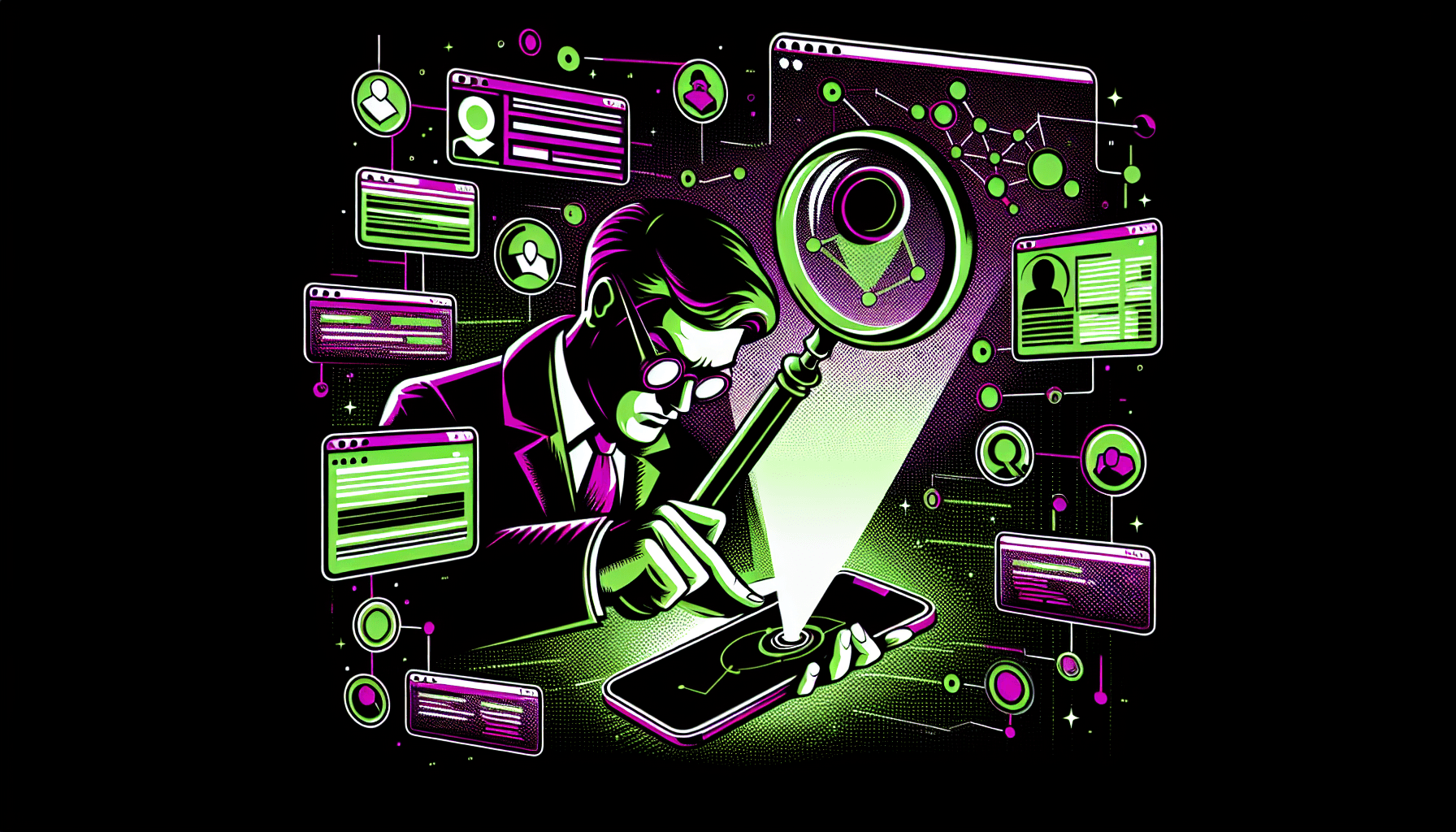
Congratulations, you played yourself. Not literally — but the fact that you just took a quiz, analyzed every question for subtext, probably second-guessed three of your answers, and are now reading this result with the same forensic intensity you bring to everything else in your life? That's the red flag. That's it. That's the whole thing.
You are the Emotional Detective. And your case file? Every person you've ever cared about.
Let's paint the picture your loved ones would paint if they could do it anonymously. You notice everything. The shift in someone's tone. The 0.3-second delay before they said "I'm fine." The fact that they usually reply in 4 minutes but today it took 11. You don't just observe — you catalog, cross-reference, and build theories. You're running a full investigation on the emotional state of everyone around you, and they didn't even know they were under surveillance.
From the outside, this looks like paranoia. From the inside, it feels like self-preservation.
Psychologically, hypervigilance like this is almost always rooted in environments where being caught off guard had consequences. Maybe someone in your life was emotionally unpredictable, and the only way to protect yourself was to detect the shift before it happened. Maybe trust was broken in a way that taught you a simple lesson: if you let your guard down, you will get hurt. So you decided to never let your guard down. Ever.
And in fairness? Your instincts are usually right. That's the maddening part. You DO notice real things. People ARE sometimes lying. Someone IS acting different. Your pattern recognition is genuinely exceptional. The problem isn't that you're wrong. The problem is that you can't stop. Even when there's nothing to find, you keep looking, because the absence of evidence isn't evidence of absence — it's evidence that you need to look harder.
This creates a paradox that would be almost funny if it weren't so painful: your detective work, designed to protect you from betrayal, actually creates the very distance and distrust that makes betrayal more likely. When someone feels like they're constantly being monitored, they stop being open. They start curating. They become guarded — not because they have something to hide, but because being around you feels like an interrogation, and nobody volunteers to be interrogated indefinitely.
The behavioral pattern here is often linked to what clinicians call anxious-preoccupied attachment with hypervigilant features. You're not just worried about being hurt. You're actively scanning for the hurt before it arrives, like a radar system that can't be turned off. And the constant scanning costs you something crucial: the ability to be present. While you're analyzing what someone said yesterday and predicting what they'll do tomorrow, you're missing what's happening right now.
Here's the counterintuitive truth: trust isn't the absence of risk. It's the choice to be vulnerable anyway. You will never gather enough evidence to feel safe. There is no amount of social media surveillance, text analysis, or behavioral monitoring that will give you the certainty you're looking for. Because what you're really looking for isn't information. It's control. And control is not the same thing as connection.
Your growth path starts with a terrifying practice: choosing not to investigate. Your partner's phone buzzes? Let it. Your friend's tone shifts? Ask directly instead of building a theory. Someone replies slowly? Accept the simplest explanation. Not because the simplest explanation is always right, but because building your life around worst-case scenarios guarantees you'll never experience the best-case ones.
Your red flag isn't that you're observant. Observation is a gift. It's that you've weaponized your observation into a surveillance system that replaces trust. And the people in your life? They need you to see them — not to watch them.