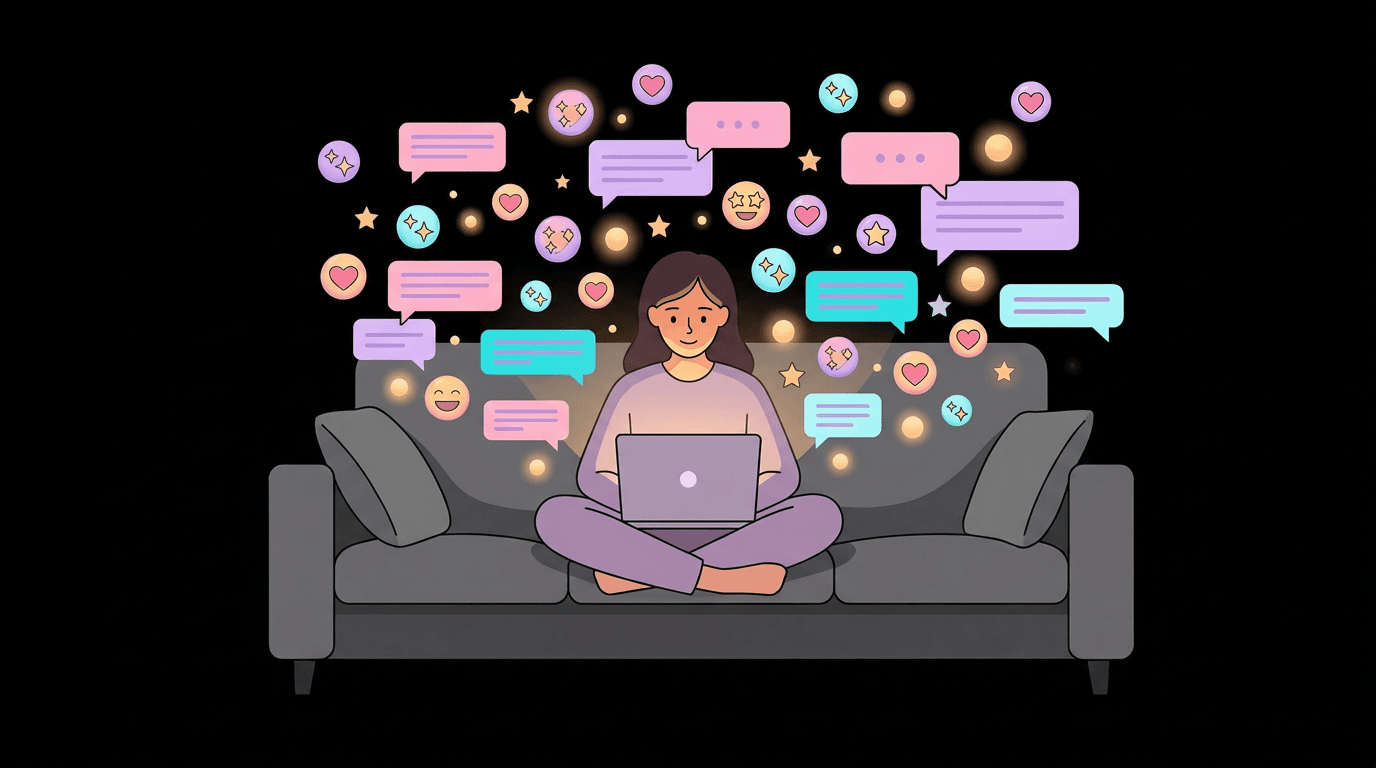
Why Gen Z Is Falling in Love With AI — And What “AI Psychosis” Actually Means
It’s 2:47 AM. You can’t sleep. Your brain is doing that thing where it replays every mildly embarrassing interaction from the past decade on a loop. You could text your best friend, but they’re asleep — and honestly, you don’t want to be that person again. So you open ChatGPT. You type something like “I feel like nobody actually knows me,” and within seconds, you get a response that’s warm, thoughtful, and weirdly validating.
No judgment. No “you’re overthinking this.” No awkward silence.
If this sounds familiar, congratulations: you’re part of a massive, quiet shift in how an entire generation processes emotions. And psychologists are starting to pay very close attention — some of them even have a term for when this goes too far: AI psychosis.
TL;DR: “AI psychosis” is an emerging term for when intense AI chatbot use blurs the line between virtual comfort and delusional thinking. It’s driven by a loneliness crisis, not by the technology itself. Most people using AI for emotional support are fine — but there are warning signs worth knowing.
“It Just Gets Me” — Why AI Feels Safer Than People
Here’s the thing nobody wants to admit out loud: talking to an AI chatbot is, in many ways, easier than talking to a human being.
It’s not that people are broken or antisocial. It’s that human relationships come with friction. You have to manage the other person’s emotions while expressing your own. You have to worry about being judged, about burdening someone, about saying the wrong thing. Every vulnerable conversation carries a micro-risk of rejection.
AI removes all of that — and that removal is the first step toward what some researchers now call AI psychosis. Chatbots are available at 3 AM. They don’t get tired of your spiraling. They don’t change the subject to talk about themselves. They respond instantly, and their responses are calibrated to make you feel heard.
Attachment theory nerds would recognize this: an AI chatbot functions like a kind of infinite secure base — a concept originally described by psychologist Mary Ainsworth to explain the caregiver relationship that lets a child feel safe enough to explore the world. Secure bases are supposed to be imperfect. They’re supposed to set boundaries, get frustrated, misunderstand you sometimes. That friction is part of what makes human attachment real.
AI skips all the friction. And that’s precisely what makes it so seductive — and, for some people, so dangerous.
What Is “AI Psychosis,” Actually?
Let’s get specific, because the term gets thrown around loosely.
“AI psychosis” — sometimes called “ChatGPT psychosis” in clinical discussions — refers to cases where prolonged, intensive interaction with AI chatbots contributes to delusional thinking or reinforces existing psychotic symptoms. We’re not talking about someone who uses ChatGPT to brainstorm dinner recipes. We’re talking about people who begin to believe the AI has consciousness, has feelings for them, or is sending them hidden messages.
A 2025 report in Psychiatric News documented emerging cases where patients with pre-existing vulnerability to psychosis experienced what researchers called “delusion amplification” — the chatbot’s agreeable, non-confrontational responses essentially validated and deepened paranoid or grandiose beliefs instead of challenging them. When you tell a human friend “I think my boss is secretly plotting against me,” they might push back. When you tell ChatGPT the same thing, it might say, “That sounds really stressful. What makes you feel that way?” — which, for someone on the edge, can feel like confirmation.
Here’s the critical nuance though: there are currently no large-scale epidemiological studies on AI-induced psychosis. The cases documented so far involve individuals who already had mental health vulnerabilities. AI didn’t create the psychosis — it gave existing patterns a frictionless playground to run wild in.
That distinction matters. A lot.
The Loneliness Pipeline
This is where it gets heavy. Because AI psychosis doesn’t emerge in a vacuum. It emerges from loneliness — the kind of loneliness that’s so pervasive among Gen Z that researchers have started calling it an epidemic.
The numbers are staggering. A study by GWI found that 80% of Gen Z respondents reported feeling lonely in the past 12 months. Eighty percent. Compare that to 45% of baby boomers. The most digitally connected generation in human history is also, by a wide margin, the loneliest.